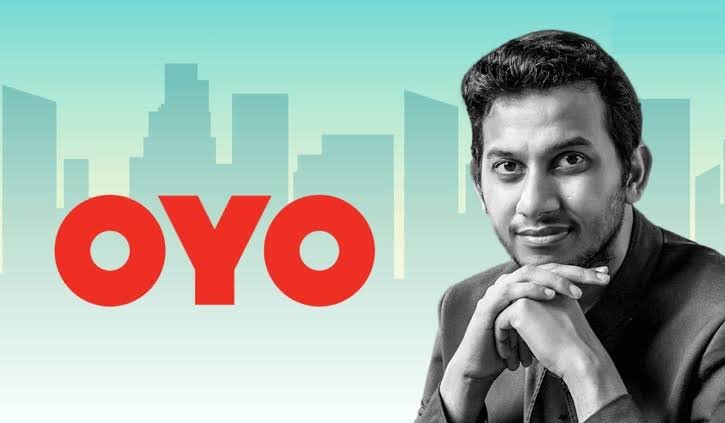
OYO’s founder Ritesh Agarwal built the company around a genuinely ambitious idea: take India’s enormous, fragmented universe of independent, often inconsistent budget hotels and standardize them under one trusted brand, without ever actually owning the properties himself. That asset-light philosophy has carried OYO from a single-city Indian startup to a network spanning over 175,000 properties globally, including the acquisition of North American motel chain Motel 6. But OYO’s real story in recent years isn’t about scale, it’s about a fundamental business model correction: the company spent years guaranteeing hotel partners a minimum revenue regardless of actual bookings, a commitment that nearly broke the business, before pivoting hard toward pure commission-based economics and finally reaching profitability, posting ₹229 crore in profit on ₹5,389 crore in FY24 revenue.
The Asset-Light Franchise Foundation
Before examining specific revenue streams, it’s worth understanding the structural principle that defines OYO’s entire approach to the hospitality industry.
- OYO operates an asset-light franchising model with a technology backbone, combining elements of a hotel chain, a technology platform, and a marketplace, without directly owning the vast majority of properties carrying its brand.
- Independent hotel owners, referred to by OYO as “Patrons,” join the network while retaining ownership of their property, in exchange receiving branding, technology systems, and access to OYO’s customer base and booking engine.
- This structure means hotel owners continue to handle the operational costs of running their property, while OYO focuses specifically on branding, technology, demand generation and driving bookings, a genuine division of responsibility that keeps OYO’s own capital requirements comparatively low relative to a traditional hotel chain.
- OYO follows a primarily B2C go-to-market strategy, acquiring customers directly through its own app and website, while also employing B2B2C tactics by listing properties on third-party platforms like Booking.com and MakeMyTrip to reach a broader audience beyond its own direct channels.
Commission and Revenue Sharing: The Original Core Mechanism
OYO’s foundational revenue model remains built around taking a percentage cut of bookings made through its platform.
- OYO charges hotel partners a commission typically ranging from 20% to 30% of the Gross Booking Value (GBV) for each booking completed through the OYO app or website, with specific rates varying by market, property type, and the exact agreement negotiated.
- This revenue-sharing structure directly aligns OYO’s earnings with hotel occupancy and booking performance, meaning the company only earns when its partner properties actually generate bookings, creating a shared incentive for both parties to maximize occupancy.
- Under this model, hotel franchisees effectively retain the negotiated nightly room rate minus OYO’s revenue share, making this commission the core, and often sole, contractual revenue line defining the relationship between OYO and an individual property owner.
- This commission-based approach has increasingly evolved into what OYO now describes as a “Management Fee,” reportedly ranging from 20% to 35% of GBV from franchised hotels, which comprises approximately 75% of OYO’s total revenue as of FY2025, reflecting just how central this mechanism remains to the overall business.
The Franchise Model’s Dominance and What Changed
Understanding how OYO’s revenue structure evolved over time reveals one of the more important strategic corrections in the company’s history.
- Today, the franchise model accounts for almost 90% of OYO’s earnings, with OYO partnering with hotels to run their operations under the OYO brand, growing the overall network without requiring direct property ownership while maintaining standardized, comparable service quality across properties.
- This represents a genuine shift from OYO’s earlier years, when the business relied much more heavily on revenue-sharing agreements that included minimum revenue guarantees, a commitment where OYO promised hotel partners a baseline level of revenue regardless of whether bookings actually materialized at that level.
- Post-pandemic, OYO pivoted decisively from “growth at all costs” toward sustainable unit economics, specifically by eliminating these minimum revenue guarantees to hotel partners, implementing stricter quality controls on which properties could join the network, and focusing on profitable markets rather than continuing rapid, undisciplined geographic expansion.
- This strategic correction, while resulting in a smaller overall footprint than OYO’s earlier breakneck expansion phase, has been directly credited with enabling the company’s path to actual profitability, since the business no longer carries the financial exposure of guaranteeing revenue it couldn’t control.
Motel 6 and Royalty Income: A Different, More Stable Revenue Structure
OYO’s acquisition of the North American Motel 6 chain introduced a genuinely different revenue mechanism than its traditional Indian-market commission model.
- Unlike OYO’s typical revenue-sharing agreements with independent hotel owners, Motel 6 operates a franchise-driven model where OYO earns royalty income from franchise operators across North America.
- This royalty income is generally more stable and predictable than direct revenue-sharing arrangements, since earnings are based on fixed franchise agreement terms rather than fluctuating directly with each individual hotel’s actual occupancy and booking performance.
- This acquisition has also meaningfully shifted OYO’s overall geographic revenue mix, with the US and Europe becoming considerably larger contributors to total revenue following the Motel 6 deal, while India now represents a smaller proportional share of OYO’s overall business than in earlier years.
- This diversification into a more traditional, royalty-based franchise structure gives OYO a genuinely different and complementary revenue mechanism alongside its core Indian-style commission model, reducing dependence on any single geography or revenue structure.
The Lease Model: A Smaller, Higher-Risk, Higher-Reward Segment
Beyond pure franchising, OYO operates a limited number of properties under a direct leasing arrangement, representing a meaningful departure from its otherwise asset-light approach.
- Under the lease model, OYO takes direct control of a property, manages its operations, and earns revenue directly from room bookings, rather than simply taking a commission on bookings a separately-owned hotel generates.
- This approach can generate higher profit margins compared to the standard aggregator or franchise model if the leased property performs well, since OYO captures the full economics of the property’s performance rather than just a percentage cut.
- However, this model also involves meaningfully higher operational risk, since OYO bears direct responsibility for the property’s performance, occupancy, and operational costs, a genuine departure from the lower-risk, asset-light philosophy defining the rest of its business.
- Reflecting this risk profile, the lease model remains a comparatively small part of OYO’s overall asset-light approach, used selectively rather than as a primary strategy for network growth.
Technology and SaaS Monetization: The Growing High-Margin Layer
OYO has increasingly positioned its internal technology infrastructure as a standalone, monetizable product offered to hotel partners, adding a genuinely higher-margin revenue layer to the business.
- OYO offers technology tools through platforms called Co-OYO and OYO OS, providing hotel partners with features like digital onboarding, revenue management, and broader business management capabilities.
- Hotel owners pay subscription or technology fees for access to these tools, distinct from the core booking commission, giving OYO a revenue stream tied to technology adoption rather than purely booking volume.
- This growing software-as-a-service income has pushed OYO’s overall revenue mix toward higher EBITDA margins, since technology and software products carry considerably lower marginal costs than the booking and distribution infrastructure underlying OYO’s core commission business.
- This shift reflects a broader strategic bet that OYO’s long-term profitability increasingly depends on successfully converting its existing network scale into high-margin, SaaS-like revenue, rather than relying purely on booking commissions that face constant competitive and market pressure.
Loyalty, Convenience Fees and Ancillary Services
Rounding out OYO’s revenue mix are several smaller but genuinely distinct additional income sources built around guest engagement and supplementary hospitality services.
- OYO Wizard, the company’s loyalty subscription program, has reportedly built a base of over 10 million active members, generating subscription-based recurring revenue while also encouraging repeat bookings across the OYO network.
- Guest convenience fees, charged directly to travelers for certain booking features, and in-app advertising for local businesses add smaller, scalable revenue streams that complement OYO’s core hotel-partner-facing commission model.
- OYO has also built out value-added hospitality services including food and beverage offerings, event spaces, OYO Total Holidays (vacation rentals), and wedding planning services through its weddingz.in platform, extending its revenue base beyond standard room bookings into adjacent hospitality and events categories.
- While individually modest compared to OYO’s core commission and franchise revenue, these additional streams reflect the company’s broader strategy of deepening monetization across both the guest and hotel-partner sides of its marketplace, rather than depending entirely on a single booking-commission mechanism.
Why Eliminating Minimum Guarantees Was the Pivotal Decision
Understanding the significance of OYO’s strategic correction helps explain why the company’s current profitability represents a genuine turnaround rather than simply organic growth.
- Minimum revenue guarantees, OYO’s earlier practice of promising hotel partners a baseline income regardless of actual bookings, created a genuine financial liability that scaled dangerously alongside the company’s rapid property network growth, since OYO was effectively underwriting revenue risk for properties whose performance it didn’t fully control.
- By eliminating these guarantees and shifting toward pure commission and franchise-based revenue, OYO’s earnings became directly tied to actual booking performance, removing the structural financial exposure that had previously threatened the business’s sustainability.
- Combined with stricter quality controls on which properties could join the network and a renewed focus on profitable markets rather than indiscriminate geographic expansion, this shift allowed OYO to achieve genuine profitability even with a smaller overall property footprint than during its earlier, more aggressive growth phase.
- This turnaround illustrates a broader lesson relevant across many venture-backed Indian startups: that sustainable unit economics, even at reduced scale, can prove considerably more valuable than continued rapid growth built on financially unsustainable guarantees to partners or customers.
Frequently Asked Questions
Q1. What exactly was a “minimum revenue guarantee” and why did it hurt OYO so significantly?
Under this earlier practice, OYO promised hotel partners a certain baseline revenue level regardless of how many bookings the property actually received, meaning OYO itself had to cover the shortfall whenever a property underperformed, a commitment that became an increasingly large financial liability as OYO’s network scaled rapidly, which is precisely why eliminating these guarantees was such a pivotal step toward the company’s eventual profitability.
Q2. Why does Motel 6 operate on a royalty model instead of the same commission structure OYO uses with independent hotels in India?
Motel 6 functions as a more traditional, established franchise brand in North America, where royalty-based franchise agreements are the standard industry structure, giving OYO a more stable, predictable revenue stream from this acquisition compared to the booking-performance-linked commission model it uses with independent hotel partners in markets like India.
Q3. Is OYO’s technology and SaaS revenue actually significant yet, or is it still a minor part of the business?
While core franchise and management fees still comprise the large majority of OYO’s total revenue, around 75% as of FY2025, the company’s growing software-as-a-service income has been specifically credited with pushing its overall revenue mix toward higher EBITDA margins, suggesting this technology layer, while not yet dominant, is becoming an increasingly meaningful contributor to overall profitability.
Q4. Does OYO’s shift toward profitability mean it has stopped expanding its hotel network?
Not entirely — OYO has shifted its expansion strategy toward prioritizing profitable markets and stricter quality standards for new properties joining the network, rather than pursuing the indiscriminate, rapid geographic growth that characterized its earlier years, meaning the company continues to grow, but more selectively and with greater attention to sustainable unit economics than before.