Paytm’s journey from a mobile recharge app in 2010 to one of India’s most recognized fintech brands hasn’t been a straight line. The company spent years attempting to become a full-stack financial superapp, running payments, its own banking license through Paytm Payments Bank, insurance, mutual funds, stockbroking and lending all under one roof, before regulatory action against Paytm Payments Bank in early 2024 forced a genuine reset. What’s emerged since is a more focused, arguably more sustainable business built around three core segments: Payment Services, Distribution of Financial Services, and Marketing Services, with one of the more surprisingly durable revenue lines coming not from software at all, but from a small physical device sitting on millions of shopkeepers’ counters.
The Three Core Segments Behind Paytm’s Revenue
Before looking at individual revenue lines, it’s worth understanding the overall structure Paytm now reports its business around.
- Paytm’s business is organized around three core segments: Payment Services, Distribution of Financial Services, and Marketing Services, a deliberate simplification from the sprawling, multi-vertical superapp strategy the company pursued during its earlier growth phase.
- This structure reflects a payment-led merchant acquisition strategy, where payments serve as the entry point that brings merchants and consumers onto the platform, after which Paytm can layer additional, higher-margin revenue opportunities on top of that same relationship.
- Following regulatory restrictions on Paytm Payments Bank in 2024, the company shifted decisively toward an asset-light distribution model for financial services, partnering with banks and NBFCs to distribute loans, insurance and investment products without needing to hold a banking license or carry that lending risk on its own balance sheet.
- In FY25, Paytm reported operating revenue in the range of ₹6,900 crore, with the business mix increasingly reflecting this more focused, merchant-payments-centered strategy rather than the earlier, broader financial superapp ambition.
Payment Services: Still the Foundation of the Business
Payment processing remains Paytm’s largest and most foundational revenue segment, serving both as a direct revenue source and the primary customer acquisition engine for everything else.
- Paytm earns revenue through transaction fees charged on payments processed via its platform, including UPI, wallet transactions, and card-based payments, with fee structures varying by payment instrument type and whether the merchant is a small business or a larger enterprise.
- Small merchants often use Paytm’s basic QR-based payment acceptance for free, while Paytm earns revenue from larger businesses through premium services and a Merchant Discount Rate (MDR), particularly on specific instruments like RuPay Credit Card transactions made via UPI.
- Paytm also earns government incentives tied to UPI transaction volumes, a notable revenue component given how heavily UPI has scaled as India’s dominant digital payment rail.
- Despite operating at comparatively thin margins, Payment Services remains critical precisely because it’s what brings merchants onto the Paytm platform in the first place, creating the relationship Paytm can later monetize through distribution and marketing services.
The Soundbox: An Unexpectedly Durable Hardware Business
One of the more distinctive and genuinely surprising parts of Paytm’s revenue comes from physical payment devices rather than software alone.
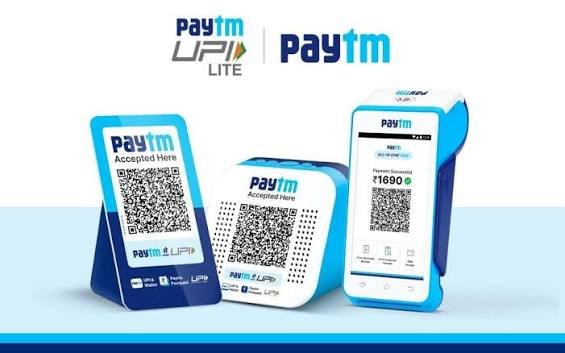
- The Paytm Soundbox, a small device that audibly confirms successful payments to merchants, is now reportedly used in over 10 million merchant locations, with subscriptions to these devices reportedly exceeding 15 million.
- Merchants pay a recurring subscription fee for these devices, alongside related hardware like EDC (Electronic Data Capture) machines, giving Paytm a genuinely predictable, recurring revenue stream tied to merchant retention rather than pure transaction volume.
- This hardware-subscription business has been specifically described as the most surprising and durable revenue stream Paytm has built, since it generates steady income regardless of fluctuations in broader transaction volumes or regulatory shifts affecting other parts of the business.
- The widespread merchant adoption of these devices also deepens Paytm’s relationship with small businesses, making the platform more sticky and creating a natural foundation for cross-selling additional financial services later.
Distribution of Financial Services: Lending, Insurance and Wealth Management
Rather than holding financial risk directly on its own books, Paytm now primarily earns commission and fee-based revenue by connecting customers and merchants to partner financial institutions.
- For lending, Paytm partners with banks and NBFCs to distribute loans to both consumers (through products like Paytm Postpaid) and merchants, earning commission, collection fees, and a share of the loan amount, without Paytm itself carrying the underlying credit risk.
- Paytm’s co-branded credit cards, launched in partnership with SBI Card, HDFC Bank and Kotak Bank, generate revenue through activation fees and a portion of ongoing transaction fees, with reportedly over 1.2 million cards activated by March 2024.
- Insurance distribution generates commission revenue, with Paytm earning a percentage of the net premium on policies sold through its platform in partnership with various insurance providers.
- Wealth management, through Paytm Money, lets the company distribute mutual funds and other investment products, capitalizing on India’s growing retail investor participation, while earning distribution commissions rather than managing the underlying funds itself.
Marketing Services: Helping Merchants Grow, and Getting Paid for It
This segment reflects Paytm’s evolution from a pure payments processor into a platform that actively helps merchants attract and retain customers.
- Marketing Services generate revenue by helping merchants promote their businesses and increase commerce activity through Paytm’s platform, including advertising placements and promotional tools.
- Advertising partners pay based on the scale and type of campaigns run across Paytm’s app and merchant network, giving brands access to Paytm’s substantial consumer and merchant base.
- This segment represents part of Paytm’s broader strategy of generating multiple revenue streams from the same existing customer and merchant relationships, increasing both retention and overall lifetime value without needing to constantly acquire new users.
- As this segment grows, it reflects Paytm’s gradual transition from being purely a payment processing company toward a more diversified platform that monetizes merchant growth and customer engagement, not just transaction volume alone.
Cloud and Software Services for Merchants
Paytm also earns revenue through subscription-based software tools sold directly to the businesses using its payment infrastructure.
- Paytm charges merchants subscription fees for cloud and software solutions, along with fees linked to the frequency of activity on these platforms, helping businesses manage various aspects of their operations beyond just payment acceptance.
- This segment has shown notably strong growth in recent years, with cloud services revenue reportedly growing over 60% year-on-year in some reporting periods, reflecting genuine demand among merchants for integrated business management tools alongside payment processing.
- These software offerings help deepen Paytm’s relationship with merchants beyond a purely transactional payment role, giving businesses additional reasons to stay within the broader Paytm ecosystem rather than switching to a competing payment provider.
- This recurring, subscription-based revenue complements the more transaction-volume-dependent nature of Paytm’s core payment processing business, adding genuine predictability to the overall revenue mix.
The Regulatory Reset That Reshaped the Business
Understanding Paytm’s current, more focused structure requires acknowledging the significant regulatory event that forced this strategic narrowing.
- In early 2024, the Reserve Bank of India imposed significant restrictions on Paytm Payments Bank, effectively ending Paytm’s ability to operate its own banking entity in the way it previously had, a major disruption to the company’s earlier full-stack financial superapp ambitions.
- This forced Paytm to pivot decisively toward its asset-light distribution model, partnering with existing banks and NBFCs for financial services rather than attempting to hold its own banking license and the associated regulatory and balance-sheet responsibilities.
- The company’s current strategy explicitly focuses on what it does best and most profitably: payment processing, payment devices like the Soundbox, and financial services distribution through partner arrangements, rather than the broader, more diffuse set of businesses it had previously pursued.
- This recovery-oriented approach centers on building a profitable merchant payments business supported by millions of merchant relationships and Soundbox subscriptions, alongside a financial services distribution business that earns commissions without carrying balance-sheet risk, representing a genuinely more disciplined, focused version of the company than existed before the regulatory reset.
Why This More Focused Model May Prove More Sustainable
Understanding the reasoning behind Paytm’s current structure helps explain why this narrower approach may ultimately serve the business better than its earlier, broader ambitions did.
- Moving away from holding financial risk directly, through lending or a proprietary banking license, toward a pure distribution model reduces Paytm’s regulatory and balance-sheet exposure, letting the company earn fee-based revenue without the capital and compliance burden of being a full financial institution itself.
- The Soundbox hardware subscription business provides a genuinely recurring, predictable revenue stream that’s less exposed to the kind of regulatory disruption that affected Paytm Payments Bank, since it’s tied to merchant device usage rather than deposit-taking or lending activities.
- By concentrating on payment processing as the core customer acquisition engine, with financial services distribution and marketing services layered on top, Paytm can generate multiple revenue streams from the same underlying merchant and consumer relationships without needing to directly own every part of the value chain.
- This leaner, more disciplined business model, built on demonstrated compliance improvements following the regulatory reset, reflects a genuinely different strategic posture than Paytm’s earlier growth-at-all-costs superapp ambitions, prioritizing sustainable, fee-based revenue over the broader but riskier full-stack financial services approach it previously pursued.
Frequently Asked Questions
Q1. Does Paytm still operate its own bank, or has that changed entirely?
Following RBI restrictions imposed on Paytm Payments Bank in early 2024, Paytm significantly scaled back its own banking operations and shifted toward an asset-light model, partnering with other banks and NBFCs to distribute financial services like loans and credit cards rather than relying primarily on its own banking entity.
Q2. How does the Paytm Soundbox actually generate revenue if it’s just a small device merchants use?
Merchants pay a recurring subscription fee to use the Soundbox and related hardware like EDC machines, meaning Paytm earns predictable, ongoing revenue simply from device usage, separate from and in addition to any transaction-based fees, which has made this hardware business a genuinely durable and reliable revenue stream.
Q3. If Paytm doesn’t hold lending risk directly anymore, how does it still make money from loans?
Paytm earns commission and collection fees from its bank and NBFC partners for originating and servicing loans distributed through its platform, calculated as a percentage of the loan amount or based on successful collections, meaning Paytm profits from facilitating the lending relationship without carrying the underlying credit risk on its own balance sheet.
Q4. Why did Paytm move away from trying to be a full financial superapp offering everything under one roof?
The regulatory action against Paytm Payments Bank in 2024 forced a significant strategic reset, pushing the company to concentrate on its most profitable and compliant core businesses, payment processing, hardware subscriptions, and financial services distribution through partners, rather than continuing to pursue the broader, more capital and compliance-intensive full-stack approach it had attempted during its earlier growth phase.